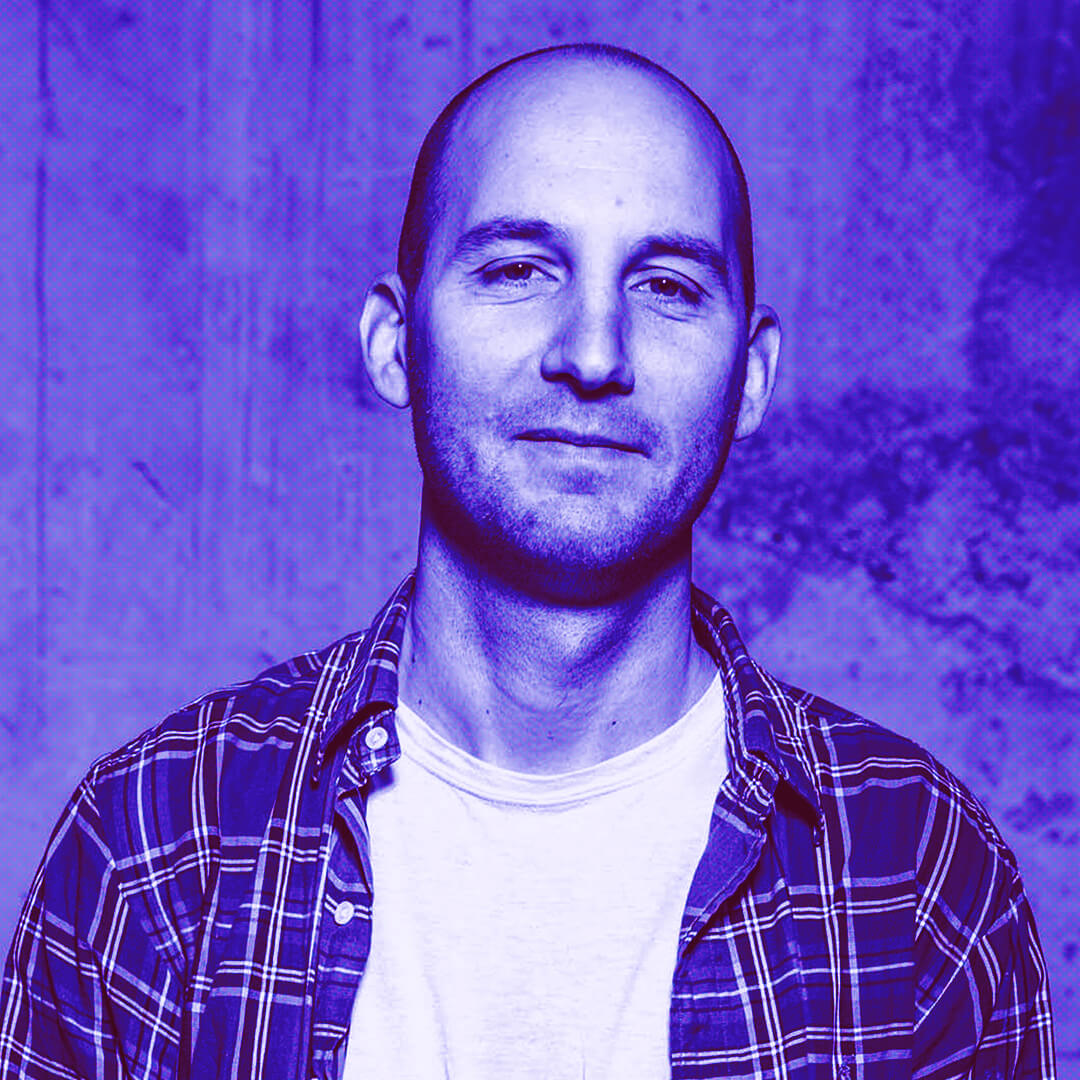
Scott Boms
Scott Boms is a cross-disciplinary graphic designer, printmaker, author, educator, and avid analog photographer. His work is grounded in the interplay and balance between traditional and contemporary tools and forms. His creative output seeks to express a natural curiosity about empathy, creativity, and open-ended discussions around the technological zeitgeist.
Scott’s work has been exhibited internationally at the Hammer Museum in LA, the Type Directors Club in New York, Designmuseo Helsinki, the Design Museum Den Bosch in the Netherlands, and is in the permanent collections of the Letterform Archive in San Francisco, and the Design Museum in London.
Outside his work at IQ, a technology lab inside HP, Scott operates Matter Editions, a tiny press and publishing imprint whose catalog includes limited edition releases such as Context Window, The Tower That Ate People, Lost Memories, and I Take Full Responsibility, among many others.
Originally from Toronto, he currently lives and works in Silicon Valley in Northern California.

Our digital experiences and how we consider readability, legibility and visual beauty are designed primarily around pixels and glass surfaces. We’ve learned how to design confidently for these surfaces to the point of there being little mystery left. But what if you had to design around a wildly different form of ephemeral interface that, in fact, you mostly didn’t want people to even have to use? What if the traditional design rules and constraints no longer applied? Where would you begin — and how would you gauge success?
In this talk, we’ll examine the process of designing for the Ai Pin’s innovative and experimental laser ink display with all the wins and (many) failures — including building a rich and expansive integrated icon library on top of custom typography, leveraging arcane and unfamiliar tools to surgically modify fonts, all while learning about the intricacies of laser projected type, working with unfinished software experiences and hardware prototypes, inventing new processes and tooling to support rapid testing and development — and all under a tight timeline.